Shoe technology is growing just like any other technology. Picking out shoes has become more and more difficult as more and more options and features are pushed out to market. Let’s start simple with some basic elements and concepts to consider when choosing a new pair of active footwear!
WEIGHT
The first thing I consider is the weight of a shoe. The weight of a shoe can vary quite a bit, by easily 150 g or more per pair. Consider what you want to do with your shoes. If you are going to do long distance activities, then the repetitive motion of lifting your shoes may affect how you feel as you continue your activities. If you are looking for a shoe that will last for a long day of hiking and not feel too heavy by the end of your hike, than you may want to look at lighter options. Sometimes with decreased weight, there are fewer or different features so make sure your shoe has what you need beyond your weight requirements. Pick up your shoes, feel it, put it on, and maybe even put it on next to a lighter shoe or heavier shoe to feel the difference. If it feels too heavy in the store, then it will definitely feel too heavy after 2 hours of walking!
Next let’s look at the SHANK or STIFFNESS OF THE SOLE OF THE SHOE.
When testing your shank for stiffness, try folding in half as well as twisting. If your shoe feels very flexible than your shank is not very stiff. Shoes that are less stiff are usually described as free, minimal, or flexible. Shoes that are stiffer are usually aligned with words like roll bar, rocker, or carbon plate. Let’s go through each one of those and discuss:
A rollbar is a metal bar put in the length of the shoe to help push through as you walk. This can sometimes take the pressure off the bottom of your feet and is great for people dealing with plantar food pain or pain related to aging. I found great relief from a shoe with a rollbar when I had plantar
A rocker describes the bottom of the shoe as it is curved and helps rock through as you walk. This added push off can help with plantar or calf pain. Rockers definitely feel different as you propel your body through space, so are a must to try on before purchasing.
A carbon plate is kind of like a diving board inside your shoe and is typically associated with speed, particularly used on race days. Carbon plates are similar to a rollbar but are used for a very different purpose.
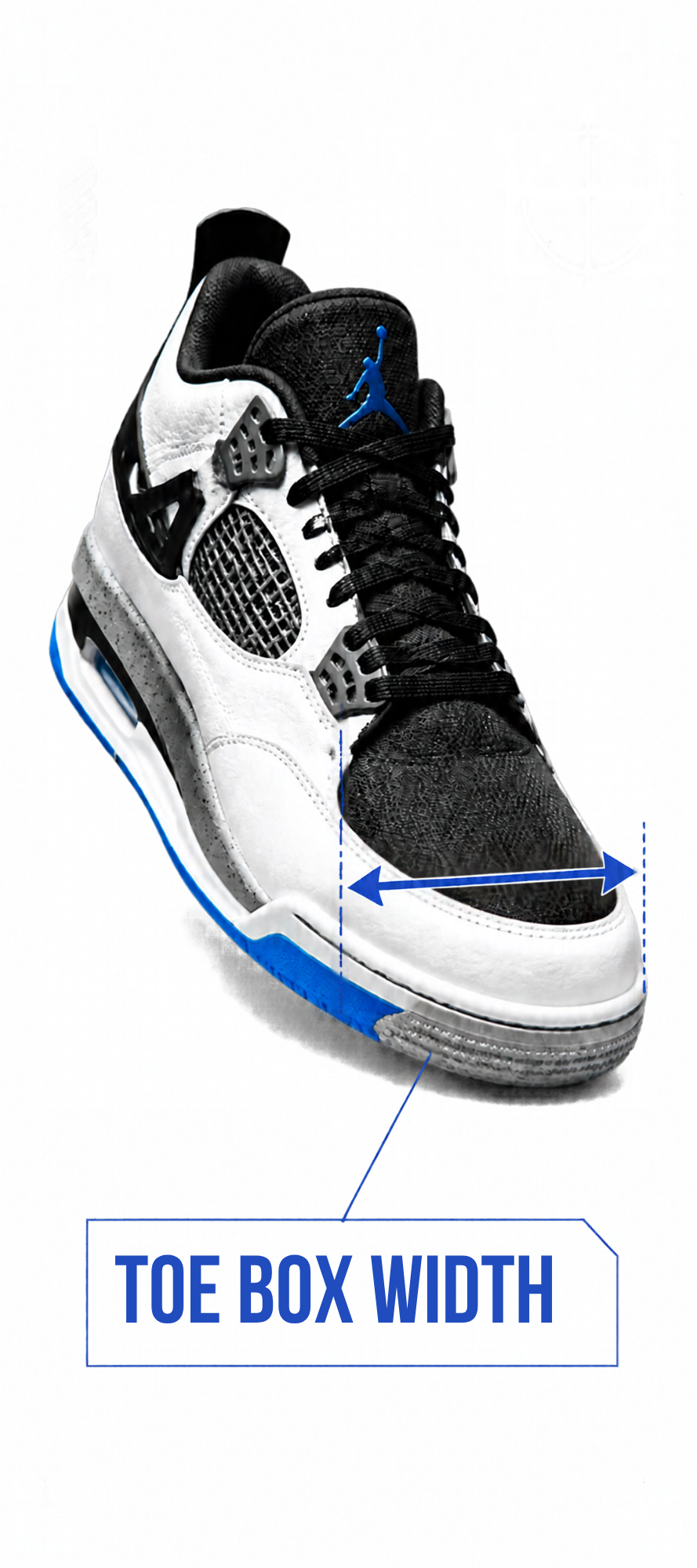
Next let’s consider TOE BOX WIDTH:
Many people have wide feet and need a little extra space in their forefoot or their toe box. If your feet are shaped like this or you are experiencing Morton’s neuroma or even pins and needles in your toes, a wider toe box may be something to consider. Many brands come with two sizes of shoes, so trying the wider option may give your feet the breathing room they need to feel comfortable as you walk and run!
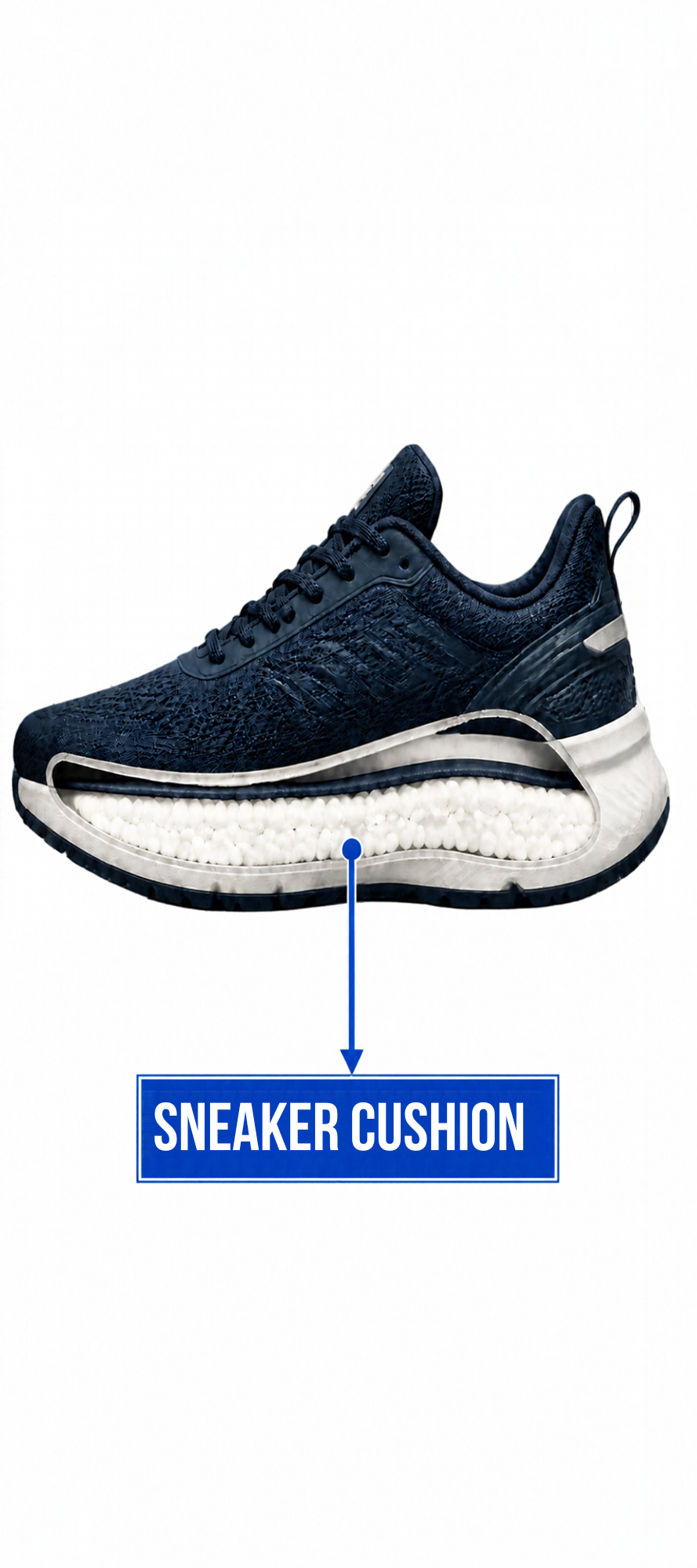
Next, let’s consider CUSHIONING!
Cushioning can be plush or stiff and it can also be responsive or not. These are often confused, so when trying on a new pair of shoes in a store you want to jog a bit or jump to feel exactly what you are getting. Is your shoe plush enough for your joints are you run? Does your shoe bounce enough and respond against the floor like you need? If you are playing on a harder surface like asphalt or concrete, you will definitely want both a responsive but cushioned shoe.
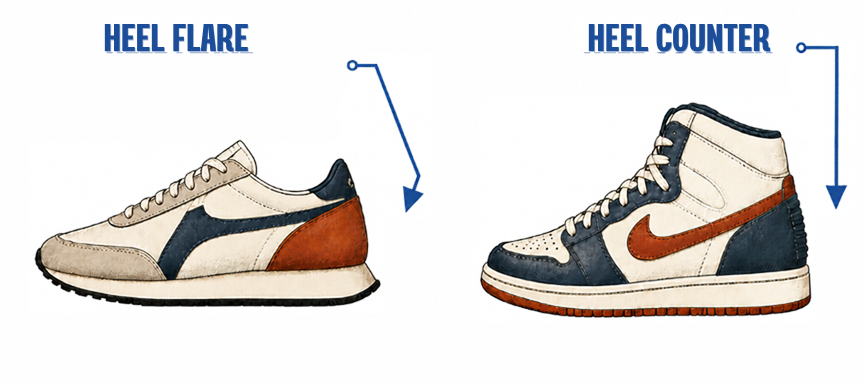
Next, let’s consider the HEEL:
Your heel has three elements to consider; your cup, your counter, and your flare. Your cup is your cradle. This helps with side to side tilting of your ankle (subtalar motion). If you are experiencing a lot of fatigue in your ankles, this maybe be from added motion which a proper cup can prevent. Your counter however is the back portion of your shoe and deals with your heel moving in and out of the shoe. You can think of your counter as your control. If your heel is slipping out, you may need a different shaped counter for your foot. Finally, the flare. The flare is the position of your heel that sticks out beyond the body of the shoe. Your flare can affect how your heel hits the ground, so if a flare is new to you, you definitely want to try them out running before committing to that new shape. Think of your flare as your footprint!
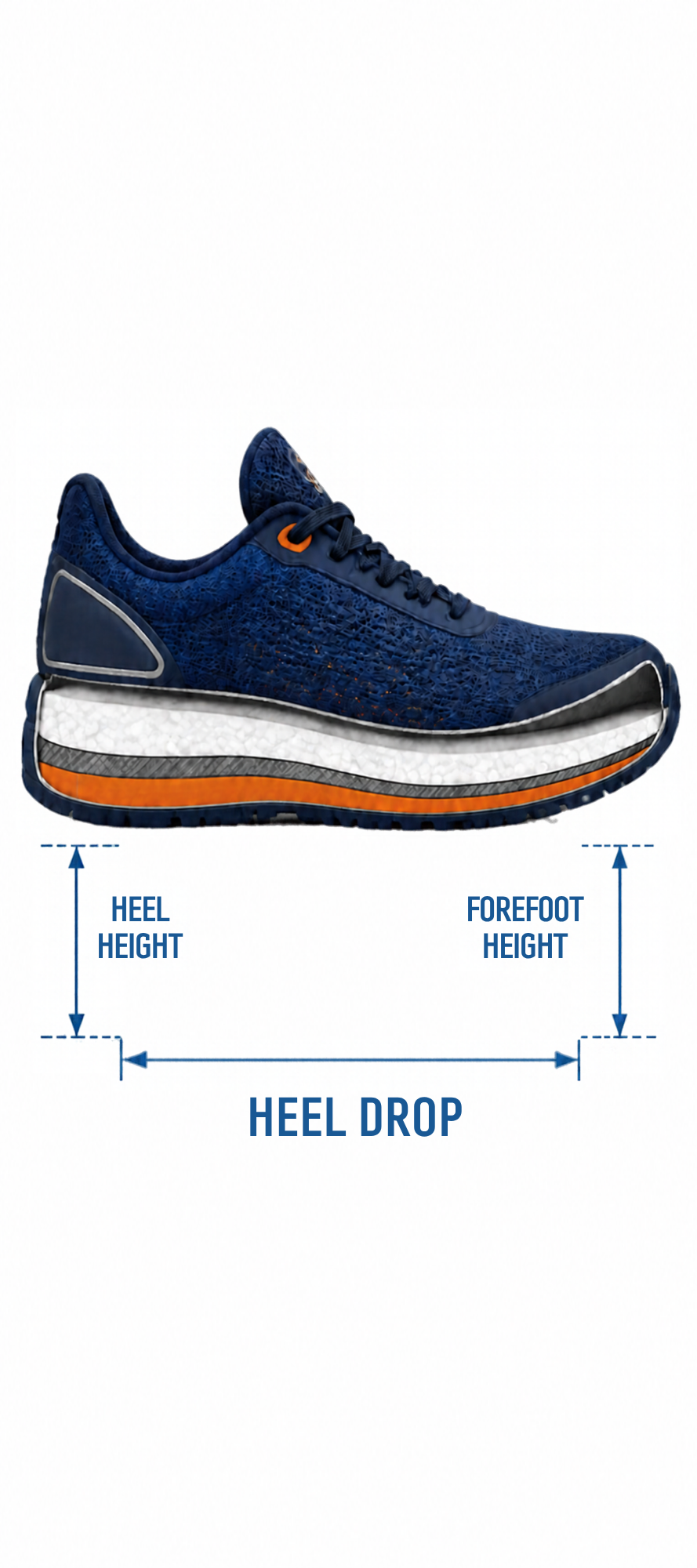
Next, let’s consider DROP:
The drop is the difference in thickness from the heel or back portion of your shoes to the front or toe portion. Some studies have found that a high drop can shift the stress of running from hips and knees while a low drop can shift to achilles and calves.This is not a hard and fast rule, so I recommend changing your drop minimally when buying new shoes, and of course trying on different levels of drop in the store so you can test them out to see where you feel them differently in your body!
Finally, let’s consider SYMMETRY:
The final thing I do in a shoe store, once I’ve picked out the pair I want to buy, is put then on a flat surface and examine them. I look for manufacturer errors or asymmetries that will lead to issues when wearing them. Sometimes during manufacturing shoes are twisted as they settle, so make sure the pair you buy look pretty similar when comparing them side by side.
If this all sounds intimidating, go to a store that specializes in active footwear. Some stores offer scans, or even have a treadmill you can test them out on. Know the store’s return policy and as always if something just doesn’t feel right about a pair of shoes, move on to the next!
If you would like to chat further about shoes or see Dr. Stephen Gray in person, visit madetomove.janeapp.com or email hello@madetomove.ca.